Chimney Repointing in Southampton
Chimney repointing in Southampton typically costs £150 to £800 or more per stack depending on the height, the access and the extent of the work. Repointing means raking out the failed, crumbling mortar between the bricks of the stack and replacing it with fresh mortar of the correct type. It is one of the most common jobs on Southampton's Victorian and Edwardian housing, where the density of chimney stacks is very high and much of the original pointing is now a century or more old and failing.
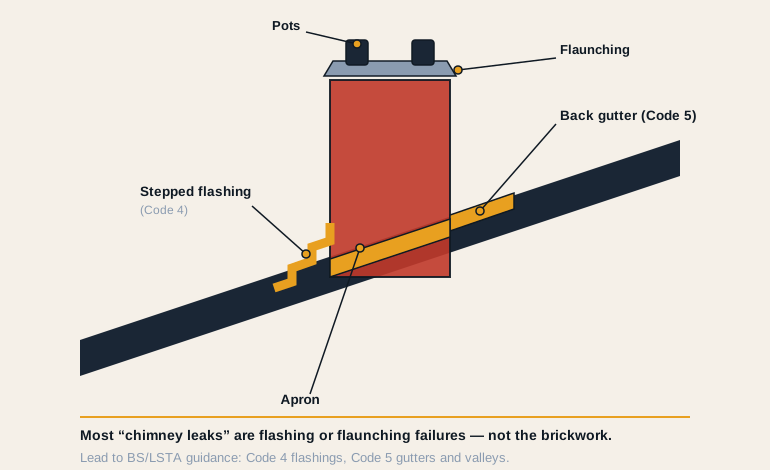
Repointing is often part of a wider package of chimney work: re-forming the flaunching (the mortar fillet that beds the pots on top of the stack), fitting or replacing cowls, and capping unused stacks to keep the weather out. We itemise each element so you can see exactly what you are paying for, and we assess the whole stack rather than patching one face and leaving the others to fail.
Why Chimney Mortar Fails in Southampton
Southampton's chimney stacks take a beating. They are the most exposed part of the roof, catching the full force of the wind and rain off Southampton Water and the Solent, and they go through more freeze-thaw cycles than any other masonry on the house. Water penetrates hairline gaps in the mortar, freezes, expands and widens the gap, and over many winters the joints open up until the stack is porous. Once the pointing fails, water tracks into the stack, down the flue and into the chimney breast, showing as damp patches on bedroom walls and staining in the fireplace.
Chimney Repointing Across Southampton's Housing Stock
The chimney repointing job varies with the era and the exposure of the property. On the Victorian terraces of Portswood, St Denys, Bevois Valley and Freemantle, the stacks are tall, often shared between adjoining houses, and built with soft red brick and lime mortar. Much of this original pointing has never been touched since the houses were built between 1890 and 1910 — it is now well past its life and failing across whole faces. Critically, these Victorian stacks must be repointed in lime mortar, not modern cement: cement is too hard for the soft Victorian brick, trapping moisture and causing the brick faces to spall and crumble.
On the interwar semis of Bitterne, Shirley and Sholing, the stacks are shorter and built with harder brick, and the original mortar was often a lime-cement mix. These stacks tend to fail more gradually, but the 1930s flaunching that beds the pots is usually cracked and shrunken by now, letting water into the top of the stack. Re-forming the flaunching and repointing the top courses is the typical job here.
On the post-war estates of Thornhill, Lordshill and Weston, many stacks serve flues that are no longer used, as households moved to gas central heating decades ago. On these, capping the unused stack — sealing the top while keeping a vent to prevent condensation — is often more sensible than repointing a stack that serves no purpose, and it removes a future maintenance liability. The coastal exposure at Weston and Woolston accelerates mortar failure on all stacks, so repointing here is needed more frequently than inland.
The Prevailing Weather Face
Southampton's prevailing weather comes from the south-west, off the Solent, and it is always the south-west face of a chimney stack that fails first. On an inspection we pay particular attention to this face, because a stack can look sound from the road — which usually shows the sheltered north-east face — while the weather face is badly eroded. This is why we assess the whole stack rather than quoting from a ground-level glance at one side, and why a proper repointing job addresses every face, not just the one you can see.
Chimney Repointing Costs — Southampton 2026
| Chimney Job | Typical Cost |
|---|
| Repointing — single stack (scope dependent) | £150–£800+ |
| Lime mortar repointing (Victorian stack) | £400–£900 |
| Re-form flaunching (bed the pots) | £150–£400 |
| Fit cowl (per pot) | £80–£200 |
| Cap unused stack (vented) | £150–£300 |
All figures include labour at the southern-England baseline; access and scaffold quoted separately where needed. Free assessment — call 0238 184 9628.
Historic England guidance requires lime mortar rather than Portland cement on pre-1919 brickwork, because hard cement traps moisture and causes the softer historic brick to spall — a common, avoidable error on Southampton's Victorian stacks.
Source: Historic England / Building Regulations
Repointing is one part of chimney care — for stack rebuilds, pot replacement and lead flashing at the base of the stack, see our chimney repairs page. If the flashing where the stack meets the roof has failed, that is a roof repair job we can quote at the same time.
Get a Free Quote in Southampton
No call-out fee. No obligation. Honest advice from a local roofer. Call 0238 184 9628.
Call 0238 184 9628