Tell us the job in 30 seconds. No pushy sales, no call-out fee.
20+
Years Local
127
5★ Reviews
24/7
Emergency
10yr
Guarantee
✓ NFRC Registered
✓ Fully Insured
✓ 10 Year Guarantee
✓ Free Quotes
Moss Removal Fareham
Moss Removal in Fareham, Hampshire
Fareham town centre has a substantial Victorian and Edwardian core around West Street and High Street, with terraced housing in the streets behind the town. The majority of the borough is 1960s to 1980s suburban development — large estates at Catisfield, Stubbington and Park Gate with predominantly concrete interlocking tile roofs now 40 to 60 years old. Portchester has older stock again including properties near the Castle.
Our moss removal service covers all of PO14 — free surveys, honest assessments and no call-out fees. Call 0238 184 9628 for same-week availability across Fareham.
Moss on a Fareham roof is not simply cosmetic. In Fareham's Portsmouth Harbour exposure — salt air affects properties within 2 to 3 miles of the waterfront, north-facing slopes can remain persistently damp — ideal conditions for moss establishment and rapid regrowth after treatment. The practical problems are valley blockage from moss and associated debris accumulating in the drainage channels, tile lifting as established moss grows under the leading edge of tiles, and ridge mortar degradation as moisture is retained against the bedding.
Our Moss Treatment Process for Fareham
We begin with a roof inspection to assess the extent of moss growth and identify any tiles already displaced by growth. Where moss is light to moderate, biocide is applied directly using a low-pressure soft wash system. Growth dies over 3 to 6 months and weathers away naturally. Where growth is heavy or valleys are blocked, physical clearance is carried out first and biocide applied following clearance. Any displaced tiles found during inspection are re-seated as part of the job.
How Often Fareham Roofs Need Treatment
In Fareham's Hampshire climate, biocide treatment typically remains effective for 2 to 4 years depending on roof aspect and local tree canopy. North-facing slopes in sheltered positions in Fareham may need treatment every 2 to 3 years. South-facing, open-aspect roofs can often go 4 to 5 years. We advise on an appropriate maintenance cycle for your specific property during the inspection.
Customer Reviews
What Fareham Homeowners Say
★★★★★
"North-facing slope had heavy moss growth blocking the valley. Physical clearance plus biocide treatment. Valley cleared, tiles re-seated where needed. Advised on annual maintenance."
Christine F. · Fareham
★★★★★
"Soft wash done correctly — no pressure washing, no damaged tiles. Moss died back within two months. Clean roof and no return call needed."
Michael W. · Fareham, Hampshire
★★★★★
"They were the only roofer who explained why high-pressure washing was wrong for our tile type. Soft wash and biocide done properly. Would recommend."
Sandra R. · Catisfield estate area, Fareham
Why Moss Grows Quickly on Fareham Roofs
Moss thrives in persistent moisture. In Portsmouth Harbour exposure — salt air affects properties within 2 to 3 miles of the waterfront, north-facing slopes and valley areas remain damp for extended periods — ideal conditions for rapid moss establishment. The Victorian town centre terraces with 1960s to 1980s Catisfield and Park Gate suburban estates means that Welsh slate on Victorian stock, concrete interlocking on post-war estates roofs are the primary substrate across Fareham. Concrete interlocking tile is more susceptible to surface moss growth than clay or slate — the surface texture retains moisture better and provides better anchorage for moss roots.
Treatment Methods for Fareham
We use soft wash biocide application — low-pressure delivery of moss-killing solution that kills growth at the root without the surface damage that high-pressure washing causes. On concrete tile roofs across Fareham, high-pressure washing strips the tile surface and erodes pointing. Dead moss weathers away over 3 to 6 months after treatment, leaving a biocide residue that suppresses regrowth for 2 to 4 years in Portsmouth Harbour exposure — salt air affects properties within 2 to 3 miles of the waterfront.
Valley Clearing in Fareham
Valley blockage is the most urgent moss-related issue in Fareham. Debris accumulating in valleys — moss growth, leaf fall, lichen material — blocks the drainage channel and causes water to back up under the tile covering. In Portsmouth Harbour exposure — salt air affects properties within 2 to 3 miles of the waterfront, a blocked valley in October typically causes a visible damp patch before Christmas. We carry out valley clearing as a standalone service or as part of a full roof treatment, with inspection of tile condition included.
Honest advice
Moss Removal in Fareham: Do You Need It?
Moss holds water against the tiles and blocks the drainage in Fareham’s damp, tree-lined streets. Here is when it is worth treating and when to leave it.
Dark algae streaking across the whole roof slope
Moss growth accelerating on shaded, tree-canopied roofs
Damp tracking in where moss holds water at tile laps
Thick green moss visibly cushioning the tiles, especially north-facing
Blocked valleys where moss and debris have collected
When it is not the answer: A light dusting of moss on a sound roof is cosmetic and can be left; we never pressure-wash a tiled Southampton roof, which drives water under the laps and strips the tile surface Read the full guide.
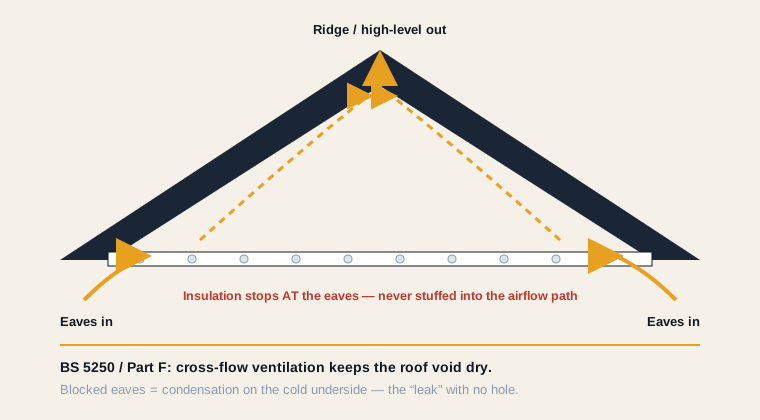
Roof-void ventilation: blocked eaves cause condensation — the leak with no hole.The process
How a Fareham Moss Removal Job Runs
We survey, free of charge
We come out, go up on the roof and into the loft, and trace the fault to its real cause on your Fareham property before quoting a penny.
You get it in writing
Your quote is itemised and plain — access and scaffold priced as separate lines — so you can see exactly what you are paying for. No obligation.
We book you in
We agree a time that suits you, and we attend the same day for genuine Fareham emergencies.
We do the work
We hand-scrape and soft-brush the moss (never pressure-wash tiles), clear it from the gutters and valleys, and apply a biocide to slow regrowth.
We clear up and sign off
Everything is cleared away, we walk you through the finished job, and you get the written guarantee.
Timescales
Job Durations at a Glance
Job
Typical duration
Moss removal + biocide — semi
1 day
Full clean — detached
1–2 days
Gutter clear add-on
1–2 hours
Biocide-only re-treatment
Half a day
Timings on Fareham roofs flex with the forecast — we plan around it and never leave a roof exposed overnight.
Access
Getting Safely onto Fareham Roofs
Moss work runs from towers, roof ladders or scaffold depending on pitch and height, always itemised in the quote. Scaffold is specified for: steep or high roofs where safe standing time is needed for the full slope - always itemised in your written quote, never a hidden extra, and we arrange it.
Fareham’s older centre and creekside streets have tight access; scaffold permits run through Fareham Borough Council. Pavement scaffold and skip permits go through Fareham Borough Council; allow a few working days on streets like West Street, High Street, the older lanes off the quay where space is tight.
Pricing
Moss Removal Prices in Fareham
Job
Typical range
Notes
Moss removal + biocide — semi
£300–£550
Full roof
Full clean — detached
£500–£900
Larger roof
Gutter clear add-on
£80–£150
Same visit
Biocide re-treatment
£180–£350
Maintenance
Soft-wash treatment
£350–£650
No pressure washing
What moves the price
Roof size, pitch and aspect
Depth of moss and how shaded the roof is
Whether gutters and valleys need clearing too
Access — towers, ladders or scaffold
Biocide treatment to slow regrowth
Worked example: a soft-scrape moss removal plus biocide on a 1930s semi at a 1930s semi off Highlands Road in Fareham: around £420 including access.
No deposit; payment on completion. Written quote separating removal, biocide and any gutter work. VAT included where applicable.
Covering PO14, PO15, PO16 and surrounding postcodes.
Guarantee
The Guarantee in Plain Terms
The removal work is guaranteed; biocide slows regrowth for a season or two, though moss returns naturally on shaded Southampton roofs.
Covered: workmanship for 10 years, in writing, transferable if you sell.
On top: manufacturer warranties on materials (terms vary by product).
Not covered: storm or impact damage - that is an insurance matter, and we will document it for your claim.
Every Fareham job carries the same written 10-year workmanship guarantee, and any materials carry their manufacturer warranties on top.
“NFRC maintenance guidance identifies blocked rainwater goods as a leading avoidable cause of water ingress and fascia decay, recommending clearing before winter as basic preventive roof care.”— NFRC maintenance guidance / HSE work-at-height
Good to know
Disruption, Mess & Weather
Quiet, external work — some scraping noise and bagged moss removed at the end — with no need to be home. You do not need to stay home for external work - we just need power and access agreed in advance.
Removal runs year-round; biocide is applied in a dry window so it is not washed off before it works. Fareham sits at the head of its own creek off Portsmouth Harbour, with salt exposure similar to the Solent shore.
FAQ
Frequently Asked Questions
Yes. We cover Fareham and all PO14 postcodes for moss removal. Free no-obligation quotes on all work. Call 0238 184 9628.
Costs vary by property size and scope. We provide free no-obligation quotes across Fareham — call 0238 184 9628 or request a quote online.
No call-out fee for any roofing work in Fareham or PO14.
Yes. 24/7 emergency call-outs across Fareham. We aim for same-day attendance. No call-out fee.
Yes. Addressing established moss growth before it blocks valleys or lifts tiles prevents the secondary water damage that blocked valleys cause. In Fareham's wet climate, an uncleared blocked valley in October typically causes a ceiling damp patch before January.
Yes. Soft wash biocide treatment is safe for Welsh slate, clay tile, concrete interlocking tile and plain clay tile. We adjust concentration for the tile type. No high-pressure washing on any tiled surface.
Yes. Moss growth debris from treated roofs, plus associated leaf and lichen material, accumulates in gutters and downpipes. We recommend clearing gutters annually regardless of whether moss treatment has been carried out, but particularly in the 12 months after treatment as the dead growth weathers off the roof.
Get In Touch
Free Quote in Fareham
No call-out fee. No obligation. Same-week availability across PO14.