Damp & Mould from the Roof: A Landlord Guide
Roof leak or condensation? For Southampton landlords the source decides responsibility — and the compliance risk. Here is how to tell, and how to fix it properly.
Tell us the job in 30 seconds. No pushy sales, no call-out fee.
Roof-sourced damp — from a slipped slate, failed flashing or blocked valley — is the landlord’s repairing responsibility under section 11, while condensation is a ventilation issue. Serious roof-sourced damp and mould can make a Southampton property legally unfit, so establishing the source and acting promptly is both a repair and a compliance priority.
Condensation or a Roof Leak? Why the Source Decides Everything
The first job with any damp or mould complaint on a Southampton rental is to establish the source, because it decides who is responsible. Condensation — caused by moisture in the air from cooking, drying washing indoors and inadequate ventilation — is a lifestyle and ventilation issue, and while you may need to address ventilation, it is not a roof repair. Roof or structural ingress — water entering through a slipped slate, a failed flashing or a blocked valley — is squarely your repairing responsibility under section 11. The two can look identical on a ceiling: both produce dark staining and black mould. The difference is in the pattern and the cause, and getting it wrong is expensive either way — you either pay for roof work that does not fix a condensation problem, or you ignore a genuine leak that then makes the property legally unfit. A proper survey, including the loft void, settles it.
How to Tell Roof-Sourced Damp from Condensation
There are reliable tells. Roof-sourced damp usually appears as a defined patch that grows after rain and is worst directly below a specific roof feature — a chimney breast, a valley, a flat-roof junction. It often has a tide-mark edge and may show in the loft as staining on the underside of the felt or on the timbers. Condensation tends to be more diffuse, concentrated in cold spots — window reveals, external corners, behind furniture against outside walls — and is worst in winter and in rooms where moisture is generated. Black spot mould that follows the cold bridges of a room points to condensation; a spreading brown stain that blooms after every downpour points to the roof. On Southampton’s solid-wall Victorian stock the picture can be mixed, which is exactly why a survey that checks the roof, the loft and the internal pattern together is worth more than a guess from the ceiling.
The Compliance Angle for Landlords
Once damp or mould is established as roof-sourced, the compliance clock is running. Under the Homes (Fitness for Human Habitation) Act 2018 the property must be fit to live in, and serious damp and mould can make it unfit, exposing you to a direct tenant claim. Awaab’s Law has set fixed timescales for social landlords to act on damp and mould hazards since October 2025, and while the private-sector version enabled by the Renters’ Rights Act 2025 has not yet commenced, the direction is unmistakable. The safe approach for a Southampton landlord is to treat a confirmed roof-sourced damp complaint as urgent: investigate quickly, make the roof watertight, remediate the mould, and document every step with dates and photographs. That record is both your compliance evidence and your protection if the tenant later disputes how promptly you acted.
Fixing Roof-Sourced Damp Properly
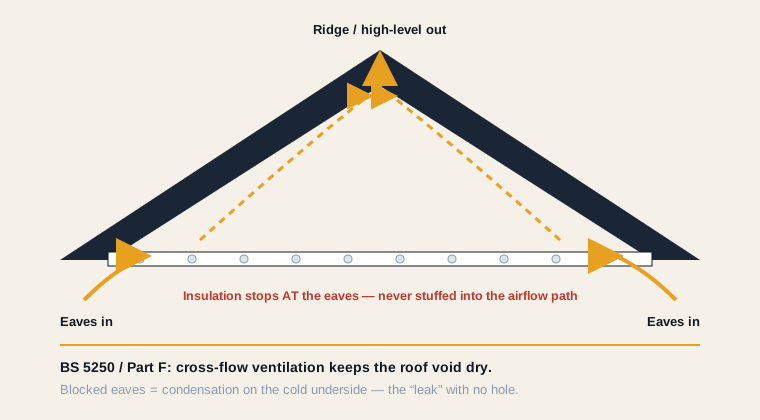
Fixing it properly means treating cause and effect together. First the roof: we trace the ingress — a slipped slate on a Portswood terrace, a cracked flashing on a Bitterne stack, a ponding flat roof on a rear extension — and make it watertight. Then the fabric needs time to dry, which in Southampton’s humid coastal air can take longer than owners expect, so we are honest about drying times rather than promising an instant cure. Finally the mould itself is remediated once the source is dead. Where the loft ventilation is poor — and older Southampton roofs were frequently built with almost none — adding soffit or ridge ventilation at the same time stops condensation compounding the problem. Done in that order, the fix holds. Done as a quick mould-paint job without addressing the leak, it is back within months and the compliance risk returns with it. If a tenant has reported damp or mould on a property you let, we can survey it, establish the source honestly, and give you a costed report for your records.
Why Southampton’s Older Rentals Are Especially Prone
Southampton’s rental market leans heavily on stock that predisposes it to roof-sourced damp. The Victorian and Edwardian terraces of Portswood, St Denys, Freemantle and Bevois Valley are solid-walled, slate-roofed and often converted into flats or HMOs, with original lead valleys and chimney flashings that have long outlived their design life. The interwar semis of Bitterne, Shirley and Sholing carry early concrete or clay tiles with mortar-bedded ridges and softwood fascias that rot and let water into the wall head. Add the city’s position at the head of Southampton Water — humid, salt-laden air that keeps the fabric from drying and accelerates the corrosion of flashings and fixings — and you have stock where a small, ignored roof fault turns into a damp complaint faster than it would inland. Landlords who understand this treat roof condition as a standing item, not an afterthought, and factor a between-tenancy roof check into their letting cycle.
The Documentation That Protects You
Whatever the source, the record you keep is what protects you if a damp or mould complaint escalates. From the first report, log the date and respond in writing. When we survey, we photograph the source, the loft and the internal damage, and set out in the report whether the cause is roof ingress, condensation or a combination — the distinction that decides responsibility. After the work we provide dated after-photographs and an itemised VAT invoice. If a tenant later claims you failed to act, or a local authority or tribunal asks what was done, that dated trail — report, survey, diagnosis, repair, remediation — is the evidence that you met your obligations promptly. It is the same discipline that Awaab’s Law formalises for social landlords, and adopting it now as a private landlord in Southampton is the cheapest insurance available. If you have a damp or mould complaint on a let property, we can survey it, tell you honestly where the moisture is coming from, and give you the documented report your position requires. See our landlord roofing service and roof inspections.
Preventing Damp Complaints Before They Start
The cheapest damp complaint is the one that never happens, and roof-sourced damp is highly preventable. Three habits keep it away on a Southampton rental. First, clear the gutters and valleys twice a year, especially on the tree-heavy streets of Highfield, Bassett and Chandler’s Ford where autumn leaf fall is relentless — a blocked gutter overflowing behind the fascia is one of the commonest routes for water into the wall head. Second, check the roof at every void period, when access is free and a slipped slate or tired flashing can be fixed for a fraction of the mid-tenancy emergency price. Third, address ventilation where the loft or the property is poorly ventilated, because condensation compounds any moisture problem and older Southampton roofs were frequently built with almost no airflow. A landlord who builds these three into the letting cycle rarely fields a damp complaint at all, spends less across the year, and stays comfortably clear of the fitness-for-habitation and Awaab’s Law risk that a lingering damp problem creates. Prevention is not just cheaper than cure — on a let property it is a compliance strategy in its own right.
Frequently Asked Questions
Not always. Condensation from lifestyle and poor ventilation differs from roof or structural ingress. Roof-sourced damp is the landlord’s repairing responsibility; condensation is a ventilation issue.
Roof-sourced damp usually appears as a defined patch below a roof feature that grows after rain, often with loft staining. Condensation is more diffuse and concentrated in cold spots and generated-moisture rooms.
Yes. Under the Homes (Fitness for Human Habitation) Act 2018, serious damp and mould from a roof leak can make a home unfit, allowing a direct tenant claim.
For social landlords, yes, with fixed timescales since October 2025. For private landlords the extension is not yet in force, but acting promptly is strongly advisable.
No. Without fixing the roof source and letting the fabric dry, mould returns within months and the compliance risk with it. Cause and effect must be treated together.
The city’s humid, coastal air slows drying. We are honest about realistic drying times rather than promising an instant cure after the leak is fixed.
Yes. Many older Southampton roofs have little ventilation, causing condensation on the cold underside of the felt. Adding soffit or ridge vents during repair helps prevent it.